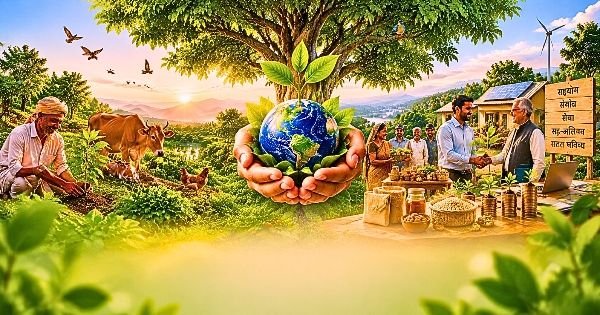

Introduction: The Need to Redefine Development
Human civilization has achieved remarkable progress in the fields of science, technology and economy. Today, mankind has access to facilities and resources that were unimaginable a few centuries ago. Advancements in communication, healthcare, transportation and production have transformed human life.
However, amidst this rapid development, an important question arises — Is increasing wealth, production and consumption the true measure of prosperity?
If economic growth alone was the foundation of human happiness, then problems such as stress, anxiety, loneliness, dissatisfaction and environmental crises would not be increasing across the world today.
On one side, resources are being accumulated in abundance by some sections of society, while on the other side many people continue to struggle for basic needs. On one side, production is increasing, while on the other side, the pressure on Earth's natural resources is continuously growing.
Therefore, there is a need to rethink the meaning of development — a development where human beings, society and nature progress together in harmony.
Indian wisdom has emphasized this balance for thousands of years. In this vision, wealth was considered an essential part of life, but never the ultimate purpose of life. Wealth was regarded as a means, not the final destination.
This balanced approach can be understood as "Dharmic Economics."
Artha Is Not Merely Wealth, It Is the Foundation of Life Management
Generally, economics is understood in terms of money, production, trade and markets. However, in Indian philosophy, the meaning of "Artha" is much broader than financial wealth.
Artha represents:
- Resources required for sustaining life
- Responsible utilization of resources
- Fulfilment of social needs
- Individual and collective prosperity
Human beings need resources for food, clothing, shelter, education, healthcare and security. Therefore, Indian philosophy never rejected wealth or material prosperity.
The problem is not wealth itself.
The problem begins when:
- Wealth becomes the ultimate goal instead of a means.
- Needs turn into unlimited greed.
- Development starts causing destruction.
- Nature is treated merely as an object of exploitation.
Dharmic Economics is the approach that restores this balance.
The Place of Artha in Indian Philosophy: The Concept of Four Purusharthas
Indian philosophy describes human life through four fundamental objectives known as the four Purusharthas:
- Dharma
- Artha
- Kama
- Moksha
1. Dharma
Dharma does not merely refer to religious rituals or beliefs. In Indian thought, Dharma represents the principles that maintain harmony and balance in life, society and nature.
Dharma means:
- Truth
- Justice
- Duty
- Compassion
- Self-discipline
- Responsibility
Dharma reminds individuals that along with rights come responsibilities.
2. Artha
Artha represents the resources required to fulfil life's needs.
When earned under the guidance of Dharma, wealth:
- Provides security to families.
- Strengthens society.
- Becomes a means for service and creation.
But when separated from Dharma, wealth can:
- Increase excessive accumulation.
- Create inequality.
- Lead to exploitation of nature.
Therefore, Indian wisdom emphasizes: Artha is necessary, but it should remain guided by Dharma.
3. Kama
Kama does not simply mean the fulfilment of desires. It represents the natural human need for happiness, relationships, emotions and appreciation of life's beauty.
When balanced with Dharma and Artha, Kama brings joy and harmony into life.
4. Moksha
Moksha represents the ultimate journey of inner freedom and spiritual growth.
It does not mean escaping from life, but achieving freedom from:
- Ego
- Excessive attachment
- Greed
- Inner conflicts
It leads towards:
- Inner peace
- Self-realization
- Higher awareness
Thus, Indian philosophy presents the journey of life as:
Dharma guiding Artha → Balanced desires → Inner evolution
The True Meaning of Dharma: The Force That Sustains Life
In modern times, the word "Dharma" is often limited to religious practices, whereas its original meaning is much broader.
Dharma is that which:
- Guides individuals towards the right path.
- Maintains harmony in society.
- Protects the relationship between humans and nature.
- Supports the weak and vulnerable.
A farmer who respects the soil not merely as a means of production but as a source of life is following the principle of Dharma.
A livestock owner who treats animals not merely as sources of income but as living beings deserving care and compassion represents Dharmic Economics.
An entrepreneur who earns profit while protecting society and the environment is also following the principles of Dharmic Economics.
When Economy Separates from Dharma: The Beginning of Imbalance
Wealth itself is neither good nor bad. Its value depends on the purpose for which it is earned and the manner in which it is used.
When economy functions under the guidance of Dharma, it becomes a means for family welfare, social development and human well-being. But when economic activities become separated from ethics, responsibility and compassion, the same wealth can become a cause of imbalance.
Many economic challenges of the modern world are not because of wealth itself, but because of our relationship and attitude towards wealth.
The Difference Between Need and Greed
Human needs are limited, but desires can become unlimited. Dharmic Economics teaches us to understand the difference between genuine needs and excessive greed.
A need-based lifestyle encourages wise use of resources, while a greed-driven lifestyle encourages excessive accumulation and exploitation.
When the desire for accumulation increases, human beings often forget that Earth's resources are not only for the present generation but also for future generations.
The Challenge of Consumer-Driven Culture
A major part of the modern economy is based on increasing production and increasing consumption. Growth in production and improvement in facilities have certainly improved many aspects of human life, but when consumption itself becomes the purpose of life, several challenges emerge.
- Accumulation of unnecessary possessions
- Excessive exploitation of natural resources
- Increase in waste and pollution
- Mental stress and dissatisfaction
- Disconnection from nature
Dharmic Economics does not suggest rejecting comforts or progress. Instead, it teaches balance between convenience and responsibility.
Major Challenges of the Modern Economic System
1. Treating Nature Merely as a Resource
One of the biggest challenges of modern development is that nature is often viewed only as a source of raw materials.
Forests, rivers, land and biodiversity cannot be measured only through their economic value.
A forest is not merely a source of timber. It is a system that supports:
- Water conservation
- Climate balance
- Biodiversity
- Millions of living organisms
When nature loses its balance, the consequences eventually affect human life and the economy itself.
2. The Gap Between Economic Growth and Life Satisfaction
Many societies today are economically more developed than ever before, yet people often experience increasing levels of stress, loneliness and dissatisfaction.
This shows that economic growth alone cannot be considered complete development.
True development is one that creates balance in physical, mental, social and spiritual well-being.
3. The Problem of Economic Inequality
The purpose of an economy should not be limited to the accumulation of wealth by a few individuals. It should also ensure dignity, opportunities and basic needs for all sections of society.
Dharmic Economics evaluates success not only by personal wealth but also by contribution towards collective welfare.
Core Principles of Dharmic Economics
1. Purity of Means
The first principle of Dharmic Economics is that the method of earning wealth is as important as the wealth itself.
Income generated through exploitation, dishonesty, injustice or destruction of nature may provide temporary success, but it cannot create lasting harmony.
Honest work, fair trade and responsible production are the foundations of true prosperity.
2. The Principle of Trusteeship
Indian wisdom views wealth not only as a personal possession but also as a responsibility.
Those who possess greater resources, knowledge or capabilities also carry greater responsibility towards society.
The essence of trusteeship is:
"What we receive is not only for personal benefit; it should also serve the larger welfare of society."
This approach transforms the mindset from accumulation to contribution.
3. A Need-Based Lifestyle
Dharmic Economics does not consider simplicity as poverty. Simplicity means using resources with awareness and wisdom.
When individuals understand their true needs, they can live a more balanced, peaceful and independent life.
4. Responsibility Towards Future Generations
Every economic decision taken today affects future generations.
Protecting water, forests, soil and biodiversity is not only an environmental responsibility but also an economic responsibility.
A sustainable economy is one that fulfills today's needs without compromising the ability of future generations to fulfill their own needs.
Dharmic Economics: A New Direction for Development
Dharmic Economics does not oppose development. Rather, it guides development towards a more balanced and responsible direction.
It promotes an economy where:
- Human dignity is protected.
- Nature is respected.
- Animals and living beings are treated with compassion.
- Resources are used responsibly.
- The welfare of society remains at the centre.
This is the economic vision where prosperity and compassion can move together.
Trusteeship: Becoming a Custodian, Not Merely an Owner
One of the most important principles of Dharmic Economics is the concept of Trusteeship. It means that human beings should not consider wealth, knowledge, skills and resources as merely personal possessions, but as responsibilities entrusted to them for the larger welfare of society and nature.
Indian wisdom has always emphasized that whatever we receive in life is not the result of individual effort alone. Our existence depends on countless contributions from society, nature and countless visible and invisible forces.
The land we live on, the water we consume, the air we breathe and the natural resources that support our lives are all gifts of nature. Therefore, their use must be accompanied by a sense of responsibility and conservation.
The spirit of trusteeship teaches us that:
- Wealth is not only meant for accumulation; it is a power that should be used wisely.
- Knowledge is not only for personal success; it should help in the growth of others.
- Resources are not only for the present generation; they are also the heritage of future generations.
Mahatma Gandhi's Concept of Trusteeship
Mahatma Gandhi also emphasized the principle of trusteeship. According to this idea, individuals who possess greater wealth and resources have a greater responsibility towards society.
It does not mean rejecting personal effort or ownership. Rather, it means developing the understanding that prosperity should also contribute to social welfare.
In modern times, this philosophy is reflected in concepts such as responsible businesses, social entrepreneurship and service-oriented organizations.
Nature-Based Economy: Balancing Development and Conservation
One of the greatest challenges before modern civilization is creating harmony between economic development and environmental protection.
For a long time, development was often measured by how much we could extract from nature. However, it is now becoming clear that excessive exploitation of nature can create serious challenges for human civilization itself.
Dharmic Economics views nature not merely as a collection of resources, but as the foundation of life.
A tree is not just timber. It:
- Purifies the air.
- Helps conserve water.
- Protects soil.
- Provides shelter to birds and other living beings.
- Maintains ecological balance.
Therefore, protecting nature is not only an environmental responsibility but also an economic and social responsibility.
Food Forest: An Example of Future Sustainable Economy
The concept of a food forest represents a beautiful example of a nature-based economy. It treats land not merely as a production unit but as a living ecosystem.
A healthy food forest includes:
- Fruit-bearing trees.
- Medicinal plants.
- Plants supporting biodiversity.
- Natural soil improvement systems.
- Habitats for birds and small creatures.
A food forest is not only a source of food production. It becomes a centre for biodiversity conservation, health improvement and ecological restoration.
It represents the ancient Indian understanding that human beings are not separate from nature, but an integral part of it.
Animal Welfare and Dharmic Economics
Animals have always played an important role in human civilization. They have supported agriculture, livelihoods and ecological balance for centuries.
However, in modern times, there is a tendency to view animals merely as economic units. Dharmic Economics encourages us to move beyond this limited perspective.
Animals are not just sources of production; they are living beings capable of experiencing pain, emotions and care.
A compassionate animal-based economy ensures:
- Proper nutrition and healthcare for animals.
- Respectful and humane treatment.
- Scientific guidance for livestock owners.
- A balance between livelihood and animal welfare.
Healthy animals support healthy farmers, and healthy farmers contribute to a healthy society.
Shristi Mitraa's Approach: From Philosophy to Action
Dharmic Economics is not merely a concept; it is a way of living and working. Shristi Mitraa is an effort to bring these values into practical action.
The core philosophy of Shristi Mitraa is:
"Where Nature, Animals, Birds and Humanity Breathe Together."
This vision is reflected through various initiatives:
- Care and rehabilitation of injured and helpless animals and birds.
- Tree plantation and environmental conservation.
- Development of food forests and biodiversity spaces.
- Scientific awareness and support for livestock owners.
- Creating sensitivity and responsibility towards nature and all living beings.
These efforts represent an economic vision where profit is balanced with compassion, development is balanced with conservation, and resources are combined with responsibility.
A New Vision of Prosperity
The future of humanity depends on moving from an economy based only on extraction and consumption towards an economy based on cooperation, conservation and compassion.
When economic activities respect nature and humanity, wealth becomes more than a personal achievement — it becomes a force for collective well-being.
Modern Vanaprastha: Transforming Experience into Service
In the Indian way of life, Vanaprastha was considered an important stage of human development. It did not mean abandoning the world or escaping from responsibilities. Rather, it meant transforming personal experience, knowledge and wisdom into service for society and inner growth.
Traditionally, a person spent the early years of life in learning, the middle years in fulfilling family and social responsibilities, and later years in sharing experience, guiding the next generation and moving towards deeper self-awareness.
In today's world, the essence of Vanaprastha has become even more relevant.
Many people, after achieving professional success and financial stability, realize that accumulation alone cannot provide complete fulfillment. A meaningful life requires contribution, compassion and connection with something larger than oneself.
During this stage of life, individuals possess:
- Years of valuable experience.
- Better understanding and decision-making ability.
- Knowledge that can guide younger generations.
- Time and resources that can serve society.
When these abilities are dedicated towards humanity, nature and social welfare, it becomes the modern expression of Vanaprastha.
From Accumulation to Contribution
The early stages of life naturally involve learning, career building, family responsibilities and financial security. These are essential parts of life.
However, as life matures, a new question should arise:
"Beyond what I have achieved for myself, what can I contribute for the betterment of society and future generations?"
This shift from possession to contribution brings deeper meaning and inner satisfaction to life.
SahajVan: A Model of Modern Vanaprastha and Nature-Based Living
In an age where human beings are becoming increasingly disconnected from nature, there is a need for spaces where people can reconnect with nature, themselves and the deeper purpose of life.
The concept of SahajVan is based on this very vision:
Living in harmony with nature, understanding oneself and making life beneficial for society.
Such a place can become a space where:
- Nature conservation becomes a way of life.
- Meditation and self-reflection are encouraged.
- People experience simple and balanced living.
- Knowledge and experiences are shared.
- The relationship between humans and nature becomes stronger.
SahajVan represents a modern interpretation of Vanaprastha, where a person does not escape from the world but becomes more conscious and useful to the world.
The Future of Dharmic Economy
The economy of the future cannot depend only on production, consumption and unlimited growth. Humanity needs an economic system where prosperity moves together with social responsibility and ecological balance.
The foundation of a future Dharmic Economy can be:
1. Development in Harmony with Nature
Future development must protect forests, water, soil and biodiversity.
Conservation of nature is not an obstacle to development; it is the foundation of long-term prosperity.
2. Cooperation Instead of Excessive Competition
A balanced society requires cooperation along with healthy competition.
When individuals, communities and organizations support each other's growth, society becomes stronger and more resilient.
3. Responsible Consumption
Every product we use carries the hidden contribution of nature and human effort.
Therefore, mindful consumption and avoiding unnecessary waste are essential elements of a responsible lifestyle.
4. Service-Oriented Prosperity
True success should not be measured only by personal achievements or accumulated wealth, but also by the positive impact one creates for other people, animals and the environment.
Shristi Mitraa's Message: Development Where Everyone Thrives
The fundamental belief of Shristi Mitraa is that human life is not meant only for personal achievements. Human beings are an integral part of nature and the larger web of life.
When we help an injured bird, plant a tree, guide a livestock owner, protect biodiversity or inspire someone towards compassion, we contribute towards building a better future.
Dharmic Economics reminds us that:
- Wealth should be accompanied by compassion.
- Development should be accompanied by conservation.
- Rights should be accompanied by responsibilities.
- Prosperity should be accompanied by service.
Conclusion: Redefining True Prosperity
The greatest question before humanity today is not only how much we can produce or accumulate, but what direction we choose for our progress.
If development remains limited to material growth alone, imbalance will continue to increase. But when development is guided by compassion, ethics and respect for nature, it becomes true prosperity.
Dharmic Economics reminds us that wealth is a means of life, not the ultimate purpose of life. Real prosperity exists when human beings are happy, society is secure and the Earth remains protected for future generations.
"When Artha moves with Dharma, prosperity transforms from mere wealth into a force of service, creation and co-existence."
This is the message of Shristi Mitraa:
"Where Nature, Animals, Birds and Humanity Breathe Together."
प्रस्तावना : विकास की नई परिभाषा की आवश्यकता
मानव सभ्यता ने पिछले कुछ शताब्दियों में विज्ञान, तकनीक और अर्थव्यवस्था के क्षेत्र में अद्भुत प्रगति की है। आज मनुष्य के पास वे सुविधाएँ उपलब्ध हैं जिनकी कल्पना कुछ समय पहले तक भी कठिन थी। संचार के साधन, चिकित्सा, परिवहन, उत्पादन क्षमता और जीवन की भौतिक सुविधाओं में अभूतपूर्व वृद्धि हुई है।
लेकिन इसी विकास के बीच एक महत्वपूर्ण प्रश्न हमारे सामने खड़ा है — क्या अधिक धन, अधिक उत्पादन और अधिक उपभोग ही वास्तविक समृद्धि का प्रमाण है?
यदि केवल आर्थिक वृद्धि ही मानव सुख का आधार होती, तो आज तनाव, चिंता, अकेलापन, असंतोष और पर्यावरण संकट जैसी समस्याएँ इतनी व्यापक नहीं होतीं। एक ओर कुछ लोगों के पास अत्यधिक संसाधन एकत्रित हो रहे हैं, वहीं दूसरी ओर अनेक लोग मूलभूत आवश्यकताओं के लिए संघर्ष कर रहे हैं। एक ओर उत्पादन बढ़ रहा है, दूसरी ओर पृथ्वी के प्राकृतिक संसाधनों पर दबाव बढ़ता जा रहा है।
इस स्थिति में हमें विकास की उस अवधारणा पर पुनर्विचार करने की आवश्यकता है जिसमें मनुष्य, समाज और प्रकृति — तीनों का संतुलन बना रहे।
भारतीय चिंतन ने हजारों वर्षों पहले इसी संतुलन की ओर संकेत किया था। यहाँ अर्थ को जीवन का आवश्यक अंग माना गया, लेकिन उसे जीवन का अंतिम उद्देश्य नहीं बनाया गया। धन को साधन माना गया, साध्य नहीं।
इसी विचार को हम "धर्मानुकूल अर्थशास्त्र" के रूप में समझ सकते हैं।
अर्थ केवल धन नहीं, जीवन व्यवस्था का आधार है
सामान्य रूप से अर्थशास्त्र को हम धन, उत्पादन, व्यापार और बाजार से जोड़कर देखते हैं। लेकिन भारतीय दृष्टिकोण में "अर्थ" का अर्थ केवल पैसा नहीं है।
अर्थ का व्यापक अर्थ है —
- जीवन निर्वाह के साधन
- संसाधनों का उचित उपयोग
- समाज की आवश्यकताओं की पूर्ति
- व्यक्ति और समुदाय की समृद्धि
मनुष्य को भोजन, वस्त्र, आवास, शिक्षा, चिकित्सा और सुरक्षा के लिए अर्थ की आवश्यकता होती है। इसलिए भारतीय दर्शन ने कभी भी धन या भौतिक समृद्धि का विरोध नहीं किया।
समस्या धन में नहीं है।
समस्या तब उत्पन्न होती है जब:
- धन साधन से लक्ष्य बन जाता है।
- आवश्यकता लालच में बदल जाती है।
- विकास विनाश का कारण बनने लगता है।
- मनुष्य प्रकृति को केवल उपभोग की वस्तु समझने लगता है।
धर्मानुकूल अर्थशास्त्र इसी संतुलन की बात करता है।
भारतीय दर्शन में अर्थ का स्थान : चार पुरुषार्थों की अवधारणा
भारतीय जीवन दर्शन में मानव जीवन को चार प्रमुख उद्देश्यों या पुरुषार्थों में विभाजित किया गया है —
- धर्म
- अर्थ
- काम
- मोक्ष
1. धर्म
धर्म का अर्थ केवल धार्मिक कर्मकांड नहीं है। भारतीय दृष्टि में धर्म वह व्यवस्था है जो जीवन, समाज और प्रकृति में संतुलन बनाए रखती है।
धर्म का अर्थ है —
- सत्य
- न्याय
- कर्तव्य
- करुणा
- संयम
- जिम्मेदारी
धर्म व्यक्ति को यह सिखाता है कि उसके अधिकारों के साथ उसके कर्तव्य भी जुड़े हैं।
2. अर्थ
अर्थ जीवन की आवश्यकताओं की पूर्ति का माध्यम है।
धर्म के मार्गदर्शन में अर्जित अर्थ:
- परिवार को सुरक्षित करता है।
- समाज को मजबूत बनाता है।
- सेवा और सृजन का माध्यम बनता है।
लेकिन धर्म से अलग हुआ अर्थ:
- संग्रह की प्रवृत्ति बढ़ा सकता है।
- असमानता पैदा कर सकता है।
- प्रकृति का शोषण कर सकता है।
इसलिए भारतीय चिंतन में कहा गया कि अर्थ आवश्यक है, लेकिन धर्म के अधीन।
3. काम
काम का अर्थ केवल इच्छाओं की पूर्ति नहीं है, बल्कि जीवन के स्वाभाविक आनंद, संबंधों और भावनात्मक आवश्यकताओं से है।
धर्म और अर्थ के संतुलन में काम जीवन में आनंद और सौंदर्य लाता है।
4. मोक्ष
मोक्ष जीवन की अंतिम आध्यात्मिक यात्रा है।
इसका अर्थ संसार से भागना नहीं, बल्कि —
- अहंकार से मुक्ति
- लोभ से मुक्ति
- आंतरिक शांति
- आत्मबोध
इस प्रकार भारतीय दर्शन में जीवन का क्रम है —
धर्म के आधार पर अर्थ → संतुलित इच्छाएँ → आत्मिक विकास।
धर्म का वास्तविक अर्थ : जीवन को धारण करने वाली शक्ति
आज "धर्म" शब्द को अक्सर केवल पूजा-पद्धति या संप्रदाय से जोड़ दिया जाता है, जबकि भारतीय दर्शन में धर्म का अर्थ बहुत व्यापक है।
धर्म वह है जो —
- व्यक्ति को सही मार्ग दिखाए।
- समाज में संतुलन बनाए।
- प्रकृति के साथ संबंध बनाए रखे।
- कमजोर और निर्बल की रक्षा करे।
एक किसान जब भूमि को केवल उत्पादन का साधन नहीं बल्कि जीवन देने वाली शक्ति मानकर उसका संरक्षण करता है, तो वह धर्म का पालन कर रहा है।
एक पशुपालक जब अपने पशु को केवल दूध देने वाली वस्तु नहीं बल्कि संवेदनशील जीव मानकर उसकी देखभाल करता है, तो वह धर्मानुकूल अर्थ व्यवस्था का उदाहरण प्रस्तुत करता है।
एक उद्योगपति जब लाभ के साथ पर्यावरण और समाज की जिम्मेदारी निभाता है, तो वह भी धर्मानुकूल अर्थशास्त्र का पालन करता है।
जब अर्थ धर्म से अलग हो जाता है : असंतुलन की शुरुआत
अर्थ स्वयं में न अच्छा है और न बुरा। उसका मूल्य इस बात से निर्धारित होता है कि उसे किस उद्देश्य और किस तरीके से अर्जित तथा उपयोग किया जा रहा है।
जब अर्थ धर्म के मार्गदर्शन में चलता है तो वह परिवार, समाज और मानव कल्याण का माध्यम बनता है। लेकिन जब अर्थ से नैतिकता, जिम्मेदारी और संवेदना अलग हो जाती है, तब वही अर्थ असंतुलन का कारण बन सकता है।
आज की अनेक आर्थिक समस्याओं के पीछे मूल कारण धन नहीं, बल्कि धन के प्रति हमारी दृष्टि है।
आवश्यकता और लालच का अंतर
मानव जीवन की आवश्यकताएँ सीमित होती हैं, लेकिन इच्छाएँ असीमित हो सकती हैं। धर्मानुकूल अर्थशास्त्र हमें आवश्यकता और लालच के बीच अंतर समझाता है।
आवश्यकता आधारित जीवन में व्यक्ति संसाधनों का उपयोग करता है, जबकि लालच आधारित जीवन में व्यक्ति संसाधनों का अत्यधिक संग्रह करने लगता है।
जब संग्रह की प्रवृत्ति बढ़ती है तो व्यक्ति यह भूल सकता है कि पृथ्वी के संसाधन केवल वर्तमान पीढ़ी के लिए नहीं, बल्कि आने वाली पीढ़ियों के लिए भी हैं।
उपभोगवादी संस्कृति की चुनौती
आधुनिक अर्थव्यवस्था का एक बड़ा हिस्सा अधिक से अधिक उत्पादन और अधिक से अधिक उपभोग पर आधारित है। उत्पादन और सुविधा का विस्तार निश्चित रूप से मानव जीवन को बेहतर बनाता है, लेकिन जब उपभोग ही जीवन का उद्देश्य बन जाता है तो अनेक समस्याएँ उत्पन्न होती हैं।
- अनावश्यक वस्तुओं का संग्रह
- प्राकृतिक संसाधनों का अत्यधिक दोहन
- कचरे और प्रदूषण में वृद्धि
- मानसिक तनाव और असंतोष
- प्रकृति से दूरी
धर्मानुकूल अर्थशास्त्र यह नहीं कहता कि मनुष्य सुविधाओं का त्याग कर दे, बल्कि यह सिखाता है कि सुविधा और संयम के बीच संतुलन होना चाहिए।
आधुनिक अर्थव्यवस्था की प्रमुख चुनौतियाँ
1. प्रकृति को केवल संसाधन मानना
आधुनिक विकास मॉडल में कई बार प्रकृति को केवल कच्चे माल के स्रोत के रूप में देखा गया है। जंगल, नदियाँ, भूमि और जीव-जंतु केवल आर्थिक मूल्य से नहीं मापे जा सकते।
एक जंगल केवल लकड़ी का भंडार नहीं है। वह जल संरक्षण, जलवायु संतुलन, जैव विविधता और असंख्य जीवों के जीवन का आधार है।
जब प्रकृति का संतुलन बिगड़ता है तो उसका प्रभाव अंततः मानव जीवन और अर्थव्यवस्था दोनों पर पड़ता है।
2. आर्थिक विकास और जीवन संतुष्टि का अंतर
आज कई समाज आर्थिक रूप से पहले से अधिक समृद्ध हैं, लेकिन मानसिक शांति और सामाजिक संबंधों में कमी अनुभव की जा रही है।
इससे यह स्पष्ट होता है कि केवल आय बढ़ना ही पूर्ण विकास नहीं है। वास्तविक विकास वह है जिसमें व्यक्ति शारीरिक, मानसिक, सामाजिक और आध्यात्मिक रूप से भी समृद्ध हो।
3. असमानता की समस्या
अर्थव्यवस्था का उद्देश्य केवल कुछ लोगों के पास अधिक से अधिक संपत्ति का संग्रह नहीं होना चाहिए, बल्कि समाज के सभी वर्गों की मूलभूत आवश्यकताओं की पूर्ति भी होना चाहिए।
धर्मानुकूल अर्थशास्त्र व्यक्ति की सफलता को केवल उसके निजी संग्रह से नहीं, बल्कि उसके सामाजिक योगदान से भी जोड़ता है।
धर्मानुकूल अर्थशास्त्र के मूल सिद्धांत
1. साधन की पवित्रता
धर्मानुकूल अर्थशास्त्र का पहला सिद्धांत है कि कमाई का माध्यम भी उतना ही महत्वपूर्ण है जितनी कमाई।
ऐसी आय जो शोषण, छल, हिंसा या प्रकृति के विनाश से प्राप्त होती है, वह बाहरी रूप से सफलता दे सकती है, लेकिन समाज में संतुलन नहीं ला सकती।
ईमानदार श्रम, न्यायपूर्ण व्यापार और जिम्मेदार उत्पादन वास्तविक आर्थिक समृद्धि के आधार हैं।
2. धन का न्यास भाव
भारतीय चिंतन में धन को केवल व्यक्तिगत अधिकार नहीं, बल्कि एक जिम्मेदारी भी माना गया है।
जिस व्यक्ति के पास अधिक क्षमता, ज्ञान या संसाधन हैं, उसकी जिम्मेदारी भी समाज के प्रति अधिक होती है।
न्यास भाव का अर्थ है —
"जो कुछ हमें प्राप्त हुआ है, उसका उपयोग केवल अपने लिए नहीं, बल्कि व्यापक कल्याण के लिए भी किया जाए।"
यह विचार व्यक्ति को संग्रह से सेवा की ओर ले जाता है।
3. आवश्यकता आधारित जीवन
धर्मानुकूल अर्थशास्त्र सादगी को गरीबी नहीं मानता। सादगी का अर्थ है — संसाधनों का विवेकपूर्ण उपयोग।
जब व्यक्ति अपनी वास्तविक आवश्यकताओं को समझता है तो वह अधिक संतुलित, शांत और स्वतंत्र जीवन जी सकता है।
4. भविष्य की पीढ़ियों के प्रति जिम्मेदारी
आज लिए गए आर्थिक निर्णयों का प्रभाव आने वाली पीढ़ियों पर पड़ता है।
यदि हम जल, जंगल, जमीन और जैव विविधता का संरक्षण करते हैं तो हम केवल वर्तमान को नहीं, भविष्य को भी सुरक्षित करते हैं।
धर्मानुकूल अर्थशास्त्र : एक नई दिशा
धर्मानुकूल अर्थशास्त्र हमें विकास का विरोध करना नहीं सिखाता, बल्कि विकास की दिशा को सही करने की प्रेरणा देता है।
ऐसी अर्थव्यवस्था जिसमें —
- मनुष्य की गरिमा सुरक्षित रहे।
- प्रकृति का सम्मान हो।
- पशु-पक्षियों के प्रति करुणा हो।
- संसाधनों का संतुलित उपयोग हो।
- समाज के सभी वर्गों का हित जुड़ा हो।
यही वह आर्थिक दृष्टि है जिसमें समृद्धि और संवेदना साथ-साथ चल सकती हैं।
न्यास भाव : धन का स्वामी नहीं, संरक्षक बनने की भावना
धर्मानुकूल अर्थशास्त्र का एक महत्वपूर्ण सिद्धांत है — न्यास भाव। इसका अर्थ है कि मनुष्य अपने पास उपलब्ध धन, ज्ञान, क्षमता और संसाधनों को केवल अपना निजी अधिकार न समझे, बल्कि उन्हें समाज और प्रकृति के प्रति अपनी जिम्मेदारी के रूप में देखे।
भारतीय चिंतन में यह भावना प्राचीन काल से दिखाई देती है। व्यक्ति को यह समझाया गया कि उसे जो कुछ प्राप्त हुआ है, उसमें केवल उसका व्यक्तिगत पुरुषार्थ ही नहीं, बल्कि समाज, प्रकृति और अनेक अदृश्य सहयोगों का भी योगदान है।
हम जिस भूमि पर रहते हैं, जिस जल का उपयोग करते हैं, जिस वायु में सांस लेते हैं और जिन संसाधनों से जीवन चलता है, वे सभी प्रकृति की देन हैं। इसलिए उनका उपयोग करते समय संरक्षण और जिम्मेदारी का भाव आवश्यक है।
न्यास भाव हमें यह सिखाता है कि —
- धन केवल संग्रह करने की वस्तु नहीं, सदुपयोग करने की शक्ति है।
- ज्ञान केवल अपने तक सीमित रखने के लिए नहीं, दूसरों के विकास के लिए भी है।
- संसाधन केवल वर्तमान पीढ़ी के लिए नहीं, भविष्य की पीढ़ियों की भी धरोहर हैं।
गांधीजी का न्यास सिद्धांत
महात्मा गांधी ने भी धन और संपत्ति के संबंध में न्यास सिद्धांत की बात कही थी। उनके अनुसार अधिक संसाधन रखने वाले व्यक्ति को समाज के प्रति जिम्मेदारी के साथ उनका उपयोग करना चाहिए।
इसका अर्थ यह नहीं है कि व्यक्ति अपनी मेहनत से अर्जित संपत्ति का उपयोग न करे, बल्कि यह भावना विकसित हो कि उसकी समृद्धि का लाभ समाज के व्यापक हित में भी पहुंचे।
आज के समय में यही विचार सामाजिक उद्यमिता, जिम्मेदार व्यवसाय और सेवा आधारित संस्थाओं के रूप में दिखाई देता है।
प्रकृति आधारित अर्थव्यवस्था : विकास और संरक्षण का संतुलन
आधुनिक अर्थव्यवस्था के सामने सबसे बड़ी चुनौती यह है कि विकास और पर्यावरण के बीच संतुलन कैसे बनाया जाए।
लंबे समय तक यह धारणा रही कि आर्थिक विकास के लिए प्रकृति का अधिक से अधिक उपयोग आवश्यक है। लेकिन अब यह स्पष्ट हो रहा है कि प्रकृति का अत्यधिक दोहन स्वयं मानव सभ्यता के लिए संकट बन सकता है।
धर्मानुकूल अर्थशास्त्र प्रकृति को केवल संसाधन नहीं मानता, बल्कि जीवन के आधार के रूप में देखता है।
एक वृक्ष केवल लकड़ी नहीं है। वह —
- वायु को शुद्ध करता है।
- जल संरक्षण में सहायता करता है।
- मिट्टी को सुरक्षित रखता है।
- पक्षियों और अन्य जीवों को आश्रय देता है।
- मानव जीवन को स्वास्थ्य और संतुलन प्रदान करता है।
इसलिए प्रकृति संरक्षण केवल पर्यावरणीय कार्य नहीं, बल्कि आर्थिक और सामाजिक जिम्मेदारी भी है।
फूड फॉरेस्ट : भविष्य की धर्मानुकूल अर्थव्यवस्था का उदाहरण
फूड फॉरेस्ट या खाद्य वन की अवधारणा प्रकृति आधारित अर्थव्यवस्था का सुंदर उदाहरण है। इसमें भूमि को केवल एक उत्पादन क्षेत्र नहीं, बल्कि एक जीवंत पारिस्थितिकी तंत्र के रूप में विकसित किया जाता है।
एक सफल फूड फॉरेस्ट में —
- फलदार वृक्ष होते हैं।
- औषधीय पौधे लगाए जाते हैं।
- पक्षियों और छोटे जीवों के लिए स्थान होता है।
- मिट्टी की उर्वरता बढ़ती है।
- जल संरक्षण होता है।
इस प्रकार फूड फॉरेस्ट केवल भोजन उत्पादन का माध्यम नहीं रहता, बल्कि जैव विविधता, स्वास्थ्य और पर्यावरण संरक्षण का केंद्र बन जाता है।
यह आधुनिक समय में उस भारतीय सोच को पुनर्जीवित करता है जिसमें मनुष्य स्वयं को प्रकृति का स्वामी नहीं, बल्कि उसका सह-अस्तित्व वाला अंग मानता था।
पशु कल्याण और धर्मानुकूल अर्थशास्त्र
मानव सभ्यता के आर्थिक विकास में पशुओं की भूमिका महत्वपूर्ण रही है। कृषि, परिवहन और आजीविका में पशुओं ने सदैव सहयोग दिया है।
लेकिन आधुनिक समय में कई बार पशुओं को केवल उत्पादन की इकाई मानने की प्रवृत्ति बढ़ी है। धर्मानुकूल अर्थशास्त्र इस दृष्टिकोण को बदलने की प्रेरणा देता है।
पशु केवल आर्थिक संसाधन नहीं, बल्कि संवेदनशील जीव हैं जिनमें भी जीवन, पीड़ा और भावनाएँ होती हैं।
एक संवेदनशील पशुपालन व्यवस्था में —
- पशुओं को उचित पोषण मिलता है।
- उनके स्वास्थ्य का ध्यान रखा जाता है।
- उनके साथ करुणा और सम्मान का व्यवहार होता है।
- पशुपालक को वैज्ञानिक जानकारी और सहयोग मिलता है।
जब पशु स्वस्थ होते हैं तो किसान की आर्थिक स्थिति मजबूत होती है और समाज को सुरक्षित एवं गुणवत्तापूर्ण खाद्य संसाधन प्राप्त होते हैं।
सृष्टि मित्रा का दृष्टिकोण : विचार से व्यवहार तक
धर्मानुकूल अर्थशास्त्र केवल एक विचार नहीं, बल्कि जीवन में उतारने वाली व्यवस्था है। सृष्टि मित्रा इसी सोच को व्यवहार में लाने का प्रयास कर रहा है।
सृष्टि मित्रा का मूल भाव है —
"जहाँ प्रकृति, पशु-पक्षी और मानवता एक साथ साँस लेते हैं।"
इस दृष्टिकोण के अंतर्गत —
- घायल और असहाय पशु-पक्षियों की सेवा।
- वृक्षारोपण और प्रकृति संरक्षण।
- फूड फॉरेस्ट जैसे प्रकृति आधारित प्रयास।
- पशुपालकों को वैज्ञानिक जानकारी उपलब्ध कराना।
- समाज में संवेदना और जिम्मेदारी की भावना विकसित करना।
ये सभी कार्य वास्तव में ऐसी अर्थव्यवस्था की ओर संकेत करते हैं जिसमें लाभ के साथ करुणा, विकास के साथ संरक्षण और संसाधनों के साथ जिम्मेदारी जुड़ी होती है।
आधुनिक वानप्रस्थ : जीवन के अनुभव को समाज के लिए समर्पित करने की अवस्था
भारतीय जीवन दर्शन में वानप्रस्थ आश्रम को जीवन का अत्यंत महत्वपूर्ण चरण माना गया है। इसका अर्थ केवल जंगल में चले जाना या सांसारिक जीवन छोड़ देना नहीं था, बल्कि जीवन के अनुभवों को समाज के कल्याण में लगाना था।
प्राचीन समय में व्यक्ति जीवन के प्रारंभिक वर्षों में शिक्षा प्राप्त करता था, फिर गृहस्थ जीवन की जिम्मेदारियाँ निभाता था और उसके बाद धीरे-धीरे अपने अनुभव, ज्ञान और समय को समाज तथा आत्मिक विकास के लिए समर्पित करता था।
आज के समय में वानप्रस्थ की भावना और भी अधिक प्रासंगिक हो गई है।
आज अनेक लोग जीवन के मध्य या उत्तरार्ध में आर्थिक रूप से सक्षम होने के बाद भी यह अनुभव करते हैं कि केवल संग्रह और व्यक्तिगत उपलब्धियाँ जीवन को पूर्ण संतोष नहीं दे सकतीं।
जीवन के इस चरण में व्यक्ति के पास —
- लंबा अनुभव होता है।
- निर्णय लेने की क्षमता होती है।
- समाज को देने के लिए समय और ज्ञान होता है।
- अगली पीढ़ी का मार्गदर्शन करने की क्षमता होती है।
यदि यह शक्ति समाज, प्रकृति और मानवता के हित में लगाई जाए तो यही आधुनिक वानप्रस्थ है।
संग्रह से समर्पण की ओर यात्रा
जीवन के प्रारंभिक चरणों में व्यक्ति स्वाभाविक रूप से अपनी शिक्षा, परिवार और आर्थिक सुरक्षा के लिए प्रयास करता है। यह आवश्यक भी है।
लेकिन जीवन की परिपक्व अवस्था में एक परिवर्तन आवश्यक है —
"मैंने अपने लिए कितना प्राप्त किया?" से आगे बढ़कर यह विचार करना कि "मैं अपने अनुभव और संसाधनों से समाज को क्या दे सकता हूँ?"
यही परिवर्तन व्यक्ति को भीतर से समृद्ध बनाता है।
सहजवन : आधुनिक वानप्रस्थ और प्रकृति आधारित जीवन का उदाहरण
आज के समय में जब मनुष्य प्रकृति से दूर होता जा रहा है, तब ऐसे स्थानों की आवश्यकता है जहाँ व्यक्ति पुनः प्रकृति, स्वयं और समाज से जुड़ सके।
सहजवन की अवधारणा इसी विचार पर आधारित है —
प्रकृति के साथ रहना, स्वयं को समझना और जीवन को समाज के लिए उपयोगी बनाना।
एक ऐसा स्थान जहाँ —
- प्रकृति संरक्षण हो।
- ध्यान और आत्मचिंतन के अवसर हों।
- लोग सरल और संतुलित जीवन का अनुभव कर सकें।
- ज्ञान और अनुभव का आदान-प्रदान हो।
- मानव और प्रकृति के बीच संबंध मजबूत हों।
ऐसे प्रयास वास्तव में आधुनिक वानप्रस्थ की भावना को जीवित करते हैं, जहाँ व्यक्ति संसार से भागता नहीं, बल्कि अधिक जागरूक होकर संसार के लिए उपयोगी बनता है।
भविष्य की अर्थव्यवस्था कैसी होनी चाहिए?
आने वाले समय की अर्थव्यवस्था केवल उत्पादन और उपभोग के आधार पर नहीं चल सकती। हमें ऐसी अर्थव्यवस्था की आवश्यकता है जिसमें आर्थिक विकास के साथ सामाजिक और पर्यावरणीय संतुलन भी बना रहे।
भविष्य की धर्मानुकूल अर्थव्यवस्था के कुछ आधार हो सकते हैं —
1. प्रकृति के साथ सहयोग
भविष्य का विकास ऐसा होना चाहिए जिसमें जंगल, जल, जमीन और जैव विविधता सुरक्षित रहें।
प्रकृति का संरक्षण विकास में बाधा नहीं है, बल्कि दीर्घकालीन समृद्धि की नींव है।
2. सहयोग आधारित समाज
अत्यधिक प्रतिस्पर्धा के स्थान पर सहयोग की भावना विकसित करनी होगी।
जब व्यक्ति और संस्थाएँ एक-दूसरे के विकास में सहयोग करती हैं तो समाज अधिक मजबूत बनता है।
3. जिम्मेदार उपभोग
हमें यह समझना होगा कि हर वस्तु के पीछे प्रकृति के संसाधन और अनेक लोगों का श्रम जुड़ा होता है।
इसलिए आवश्यकता के अनुसार उपयोग और अपव्यय से बचना धर्मानुकूल जीवन का हिस्सा है।
4. सेवा आधारित समृद्धि
वास्तविक सफलता केवल व्यक्तिगत उपलब्धियों से नहीं मापी जानी चाहिए, बल्कि इस बात से भी कि हमारे जीवन से कितने लोगों और जीवों को लाभ मिला।
सृष्टि मित्रा का संदेश : विकास जिसमें सभी का हित हो
सृष्टि मित्रा का मूल विचार यही है कि मानव जीवन केवल अपने लिए जीने का नाम नहीं है। मनुष्य प्रकृति और समस्त जीव-जगत का एक हिस्सा है।
जब हम किसी घायल पक्षी की सहायता करते हैं, जब हम एक वृक्ष लगाते हैं, जब हम किसी पशुपालक को सही जानकारी देते हैं या जब हम किसी व्यक्ति में प्रकृति के प्रति संवेदना जगाते हैं, तब हम वास्तव में एक बेहतर भविष्य का निर्माण करते हैं।
धर्मानुकूल अर्थशास्त्र हमें यही सिखाता है कि —
- धन के साथ दया हो।
- विकास के साथ संरक्षण हो।
- अधिकारों के साथ जिम्मेदारी हो।
- समृद्धि के साथ सेवा हो।
निष्कर्ष : वास्तविक समृद्धि की नई परिभाषा
मानव सभ्यता के सामने आज सबसे बड़ा प्रश्न यह नहीं है कि हम कितना अधिक उत्पादन कर सकते हैं, बल्कि यह है कि हम किस दिशा में आगे बढ़ना चाहते हैं।
यदि विकास केवल भौतिक सुविधाओं तक सीमित रहेगा तो असंतुलन बढ़ता जाएगा। लेकिन यदि विकास में करुणा, नैतिकता और प्रकृति के प्रति सम्मान जुड़ जाएगा तो वही विकास वास्तविक समृद्धि बनेगा।
धर्मानुकूल अर्थशास्त्र हमें याद दिलाता है कि धन जीवन का साधन है, जीवन का उद्देश्य नहीं। वास्तविक संपन्नता वह है जिसमें व्यक्ति सुखी हो, समाज सुरक्षित हो और पृथ्वी आने वाली पीढ़ियों के लिए संरक्षित रहे।
"जब अर्थ धर्म के साथ चलता है, तब समृद्धि केवल संपत्ति नहीं रहती, वह सेवा, सृजन और सह-अस्तित्व की शक्ति बन जाती है।"
यही सृष्टि मित्रा का संदेश है —
जहाँ प्रकृति, पशु-पक्षी और मानवता एक साथ साँस लेते हैं।