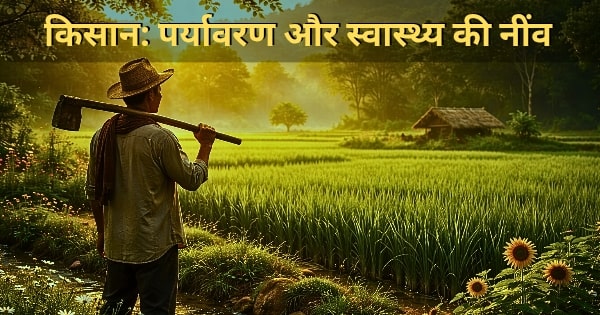

National Farmers’ Day: The Inseparable Link Between Farmers, Environment, and Health
Every year on 23rd December, India observes National Farmers’ Day. This day is not merely an occasion to extend greetings to farmers, but an opportunity for society to reflect on a deeper truth—that the food we eat, the health we enjoy, and the environment we depend upon are all rooted in the hands of the farmer.
At a time when the world is facing environmental degradation, climate change, water scarcity, and a rise in lifestyle-related diseases, it becomes essential to understand that both the problem and the solution are closely connected to agriculture.
The Farmer Is Not Only a Food Provider, but a Guardian of Nature
In Indian tradition, the farmer is respectfully called the provider of food. Yet this title alone does not fully capture the farmer’s role. A farmer does not just grow crops—he safeguards soil fertility, conserves water, supports biodiversity, and sustains the delicate balance between humans, animals, and nature.
When a farmer sows a seed, he is not merely planting a crop; he is laying the foundation for future generations. His farming practices determine whether the soil remains alive or becomes lifeless, whether water is preserved or wasted, and whether food nourishes the body or silently contributes to disease.
Soil, Water, and Seed: The Sacred Trinity of Life
The soul of agriculture lies in three fundamental elements—soil, water, and seed. If the balance among these three is disturbed, not only farming but life itself enters a state of crisis.
Excessive use of chemical fertilizers and pesticides has weakened the natural vitality of soil. Soil, once rich with microorganisms and life, has in many places been reduced to a mere growing medium.
Water, the backbone of agriculture, is rapidly depleting due to over-extraction and unsuitable cropping patterns. Groundwater levels are falling, ponds are drying up, and rivers are losing their flow.
Seeds, which were once carefully preserved by farmers themselves, are now increasingly controlled by markets. This dependency threatens farmers’ self-reliance and reduces agricultural diversity.
Chemical Farming and Human Health
The rising incidence of lifestyle diseases such as diabetes, hypertension, cancers, and hormonal disorders is closely linked to the quality of food we consume.
When excessive chemicals are applied in fields, they enter grains, vegetables, and fruits, eventually making their way into the human body. Such food may fill the stomach, but it does not truly nourish the body.
Health experts now increasingly acknowledge that healthy food begins with healthy farming. And at the heart of healthy farming stands the farmer.
Livestock, Agriculture, and Ecological Balance
In traditional Indian agriculture, livestock held a central place. Cows, bullocks, and buffaloes were not merely sources of production, but the backbone of the farming system.
Organic manure derived from animal waste enriched the soil, while animals and farmers shared a mutually supportive relationship.
As livestock gradually becomes separated from farming, this balance is breaking down—affecting the environment, farmers’ incomes, and the nutritional security of society.
The Health and Mental Well-being of Today’s Farmer
A farmer does more than work the land. He constantly faces uncertainties of weather, market prices, debt, and an unpredictable future.
Continuous stress, financial pressure, and social expectations take a toll on the farmer’s mental and physical health.
For a truly healthy society, it is essential that the farmer himself remains healthy and balanced—both physically and mentally.
The Key to Environmental Protection Lies with the Farmer
Tree plantation, water conservation, crop rotation, organic farming, and the preservation of local seeds are among the most effective tools for environmental protection.
These measures can only succeed when farmers are informed, respected, and supported in their efforts.
With the right guidance and encouragement, farmers can become the strongest allies in addressing environmental challenges.
Balanced Farming Leads to a Balanced Life
Just as balance is essential in life, it is equally important in agriculture.
Not excessive chemicals, not reckless production, not exploitation of nature— but farming guided by need, conservation, and long-term thinking.
This balance protects farmers, preserves nature, and ensures the well-being of future generations.
Shristi Mitraa’s Perspective
Shristi Mitraa believes that farmers, environment, and health are not separate concerns, but interconnected elements of a single life system.
When farmers are empowered, agriculture becomes sustainable. When agriculture is sustainable, the environment is protected. And when the environment is protected, human life flourishes.
Shristi Mitraa works towards this balance through awareness, service, and community participation.
Conclusion: Beyond Celebrating Farmers’ Day
National Farmers’ Day is not merely a date on the calendar, but a reminder of our deep dependence on farmers.
If we truly wish to honor farmers, we must understand their labor, their knowledge, and their role in sustaining life.
Farmers should be recognized not only as food providers, but as guardians of life itself.
This understanding forms the true tribute to farmers, and reflects the core philosophy of Shristi Mitraa.
राष्ट्रीय किसान दिवस: किसान, पर्यावरण और स्वास्थ्य का अटूट संबंध
हर वर्ष 23 दिसंबर को राष्ट्रीय किसान दिवस मनाया जाता है। यह दिन केवल किसानों को शुभकामनाएँ देने का अवसर नहीं है, बल्कि समाज को यह सोचने का अवसर देता है कि जिस अन्न से हमारा शरीर बनता है, जिस भोजन से हमारा स्वास्थ्य जुड़ा है, और जिस प्रकृति पर हमारा जीवन टिका है—उसके केंद्र में किसान खड़ा है।
आज जब पर्यावरण संकट, जलवायु परिवर्तन, बढ़ती बीमारियाँ और असंतुलित जीवनशैली की बातें हो रही हैं, तब यह समझना और भी आवश्यक हो जाता है कि इन सभी समस्याओं की जड़ और समाधान—दोनों कहीं न कहीं किसानी से जुड़े हैं।
किसान केवल अन्नदाता नहीं, पर्यावरण का संरक्षक भी है
भारतीय परंपरा में किसान को अन्नदाता कहा गया है, पर यह शब्द उसके योगदान को पूरा नहीं दर्शाता। किसान केवल अनाज नहीं उगाता, वह मिट्टी की उर्वरता, पानी के संरक्षण, पशु-पक्षियों के सहजीवन और जैव विविधता का भी रक्षक होता है।
एक किसान जब बीज बोता है, तो वह केवल फसल नहीं उगाता— वह आने वाली पीढ़ियों के लिए जीवन की नींव रखता है। उसकी खेती की पद्धति यह तय करती है कि मिट्टी जीवित रहेगी या बंजर, पानी बचेगा या खत्म होगा, और भोजन औषधि बनेगा या बीमारी।
मिट्टी, पानी और बीज: जीवन की त्रिवेणी
किसानी की आत्मा तीन तत्वों में बसती है—मिट्टी, पानी और बीज। यदि इन तीनों का संतुलन बिगड़ जाए, तो खेती ही नहीं, जीवन भी संकट में आ जाता है।
आज रासायनिक उर्वरकों और कीटनाशकों के अंधाधुंध उपयोग से मिट्टी की प्राकृतिक शक्ति कमजोर हो रही है। मिट्टी, जो कभी जीवंत थी, आज कई स्थानों पर केवल एक माध्यम बनकर रह गई है।
पानी, जो खेती का आधार है, वह भी अति-उपयोग और गलत फसल चक्र के कारण तेजी से समाप्त हो रहा है। भूमिगत जल स्तर गिरता जा रहा है, तालाब और नदियाँ सूख रही हैं।
बीज, जो कभी किसान का अपना था, आज बाज़ार पर निर्भर होता जा रहा है। इससे किसान की आत्मनिर्भरता और खेती की विविधता दोनों प्रभावित हो रही हैं।
रासायनिक खेती और मानव स्वास्थ्य
आज समाज में बढ़ती बीमारियाँ—जैसे मधुमेह, उच्च रक्तचाप, कैंसर, हार्मोन संबंधी समस्याएँ— कहीं न कहीं हमारे भोजन से जुड़ी हैं।
जब खेत में अत्यधिक रसायन डाले जाते हैं, तो वही रसायन अनाज, सब्ज़ी और फल के माध्यम से हमारे शरीर में पहुँचते हैं। यह भोजन पेट तो भर देता है, पर शरीर को स्वस्थ नहीं रख पाता।
स्वास्थ्य विशेषज्ञ भी अब यह स्वीकार कर रहे हैं कि स्वस्थ भोजन की शुरुआत स्वस्थ खेती से होती है। और स्वस्थ खेती का केंद्र किसान है।
पशुपालन, खेती और संतुलन
पारंपरिक भारतीय खेती में पशुपालन का विशेष स्थान था। गाय, बैल, भैंस—ये केवल उत्पादन के साधन नहीं थे, बल्कि खेती की रीढ़ थे।
गोबर, गोमूत्र, जैव खाद—इनसे मिट्टी को पोषण मिलता था, और पशु व किसान के बीच सहजीवन बना रहता था।
आज जब पशुपालन खेती से अलग होता जा रहा है, तब यह संतुलन भी टूट रहा है। इसका असर पर्यावरण, किसान की आय और समाज के पोषण स्तर—तीनों पर पड़ रहा है।
आज के किसान का स्वास्थ्य और मानसिक तनाव
किसान केवल खेत में मेहनत ही नहीं करता, वह मौसम, बाजार, कर्ज और अनिश्चित भविष्य—सबका सामना करता है।
लगातार तनाव, आर्थिक दबाव और सामाजिक अपेक्षाएँ किसान के मानसिक स्वास्थ्य को भी प्रभावित करती हैं।
स्वस्थ समाज के लिए यह आवश्यक है कि किसान स्वयं स्वस्थ और संतुलित हो— शारीरिक रूप से भी और मानसिक रूप से भी।
पर्यावरण संरक्षण की कुंजी: किसान के हाथ में
वृक्षारोपण, जल संरक्षण, जैविक खेती, फसल चक्र और स्थानीय बीज— ये सभी पर्यावरण संरक्षण के प्रभावी उपाय हैं, और इनका क्रियान्वयन किसान के माध्यम से ही संभव है।
यदि किसान को सही जानकारी, सम्मान और सहयोग मिले, तो वह पर्यावरण संकट का समाधान बन सकता है।
संतुलित खेती = संतुलित जीवन
जैसे जीवन में संतुलन आवश्यक है, वैसे ही खेती में भी संतुलन आवश्यक है।
न अधिक रसायन, न अंधाधुंध उत्पादन, न प्रकृति का शोषण— बल्कि आवश्यकता, संरक्षण और दीर्घकालिक सोच।
यही संतुलन किसान को भी सुरक्षित रखता है और समाज को भी।
Shristi Mitraa का दृष्टिकोण
Shristi Mitraa मानता है कि किसान, पर्यावरण और स्वास्थ्य— ये तीनों अलग-अलग विषय नहीं हैं, बल्कि एक ही जीवन-चक्र के हिस्से हैं।
जब किसान सशक्त होगा, तो खेती स्वस्थ होगी। जब खेती स्वस्थ होगी, तो पर्यावरण सुरक्षित होगा। और जब पर्यावरण सुरक्षित होगा, तो मानव जीवन भी स्वस्थ होगा।
Shristi Mitraa इसी संतुलन के लिए जागरूकता, सेवा और सहयोग के माध्यम से कार्य करता है।
निष्कर्ष: किसान दिवस से आगे की सोच
राष्ट्रीय किसान दिवस केवल एक तारीख नहीं, बल्कि एक स्मरण है— कि हमारा अस्तित्व किसान से जुड़ा है।
यदि हम सचमुच किसान का सम्मान करना चाहते हैं, तो हमें उसके श्रम, ज्ञान और भूमिका को समझना होगा।
किसान को केवल अन्नदाता नहीं, जीवनदाता के रूप में देखना होगा।
यही सच्ची श्रद्धांजलि है, और यही Shristi Mitraa की भावना भी।