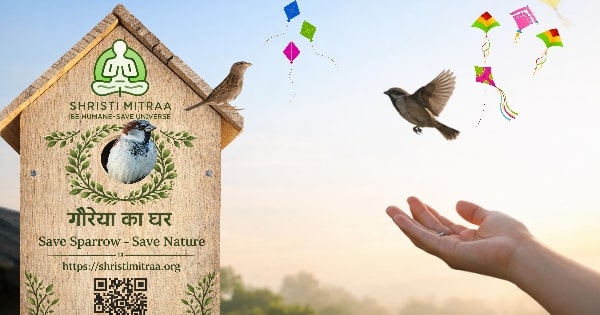

Shristi Mitraa SKY SAFETY MODEL (Public Awareness Campaign)
Theme: Bird safety, rescue readiness, and responsible kite-festival practices during Makar Sankranti and the kite-flying season.
Purpose: “The sky also needs safety” — so our celebration does not become a hidden emergency for birds, and every locality moves closer to becoming a Bird Safe City.
Makar Sankranti is one of India’s most beautiful festivals. It celebrates the sun’s northward journey, fresh energy, new hope, and community joy. Rooftops fill with colorful kites, children laugh, families gather, and the sweetness of til-gud spreads warmth across homes.
But alongside this joy, there is a reality we often don’t notice: during kite-flying season, many birds get injured. Sparrows, pigeons, doves, kites (the bird), crows, parrots, egrets, and other species may suffer wing cuts, throat or leg entanglement, eye injuries, and severe shock. Some birds do not die instantly; they struggle for hours. Many of them can survive if they receive help quickly — and that is the most important point.
This is why Shristi Mitraa presents a simple, practical, and citizen-friendly framework called the SKY SAFETY MODEL. It is not a complicated government scheme. It is a public culture that can start from your rooftop and spread to your lane, your school, and your city — building a responsible festival mindset without killing the joy of celebration.
What is the SKY SAFETY MODEL?
The SKY SAFETY MODEL is a community-based, city-level bird protection and rapid response framework that aims to reduce bird accidents during kite-festival days, ensure timely first aid and rescue support, and build a long-term habit of responsible celebration.
Just as roads have traffic rules, the SKY SAFETY MODEL proposes that the “sky” deserves safety protocols too. The model is built on three pillars of action: Prevention + Quick Support + Community Participation.
Why do we need this model?
In many places, bird injury is treated as “small” or “unavoidable.” But birds are vital to ecological balance. They help control insects, spread seeds, support biodiversity, and act as environmental indicators. When birds disappear, our environment becomes weaker — and human health and livelihoods are affected too.
During kite season, many birds die not only from the injury itself but from delay. People may notice a bird and assume someone else will help. Some want to help but don’t know how. Some don’t know any helpline. Rescue networks often remain fragmented and volunteer-dependent.
The SKY SAFETY MODEL is designed to reduce this delay. It ensures that a citizen is never helpless: there is always a simple next step — a safe box, a local rescue point, and a helpline grid.
The SKY SAFETY MODEL: 5 Core Pillars (Explained Simply)
1) Bird Emergency Zones (BEZ) — “A Bird ICU in Every Locality”
Bird Emergency Zones (BEZ) are small, local “bird support points” that can be created at homes, shops, schools, housing societies, or community centers. A BEZ is not a hospital. It is a first-response safety point.
Think of a wounded bird on the road. If someone gently moves it to a safe, quiet place, controls bleeding at a basic level, prevents panic, and informs a rescue contact quickly — many birds can survive. The BEZ exists to make that first response easy and organized.
What can a BEZ keep ready?
- Clean cotton and a soft cloth/gauze
- Bandage or medical tape (basic)
- Antiseptic spray (if available)
- Disposable gloves (optional but helpful)
- A ventilated cardboard box (with small air holes) as a temporary shelter
- A small bowl (especially important in summer, still useful in winter)
- Shristi Mitraa Bird Helpline number and local rescue contacts
Important: A BEZ is not for untrained people to perform complex treatment. It is for providing safety, calm, and quick connection to proper help.
Benefits of BEZ:
- Fast shelter prevents further injury and panic
- Bleeding risk can be reduced before rescue arrives
- Local response time improves drastically
- Community confidence increases: “help is possible”
2) Silent Sky Hours — “Hours When the Sky Needs Calm”
Birds have peak flight activity during early morning and evening hours — especially 6–8 AM and 5–7 PM. These are the hours birds move for water, food, and return to nests. During these windows, the chances of collision and entanglement rise significantly if kite flying is intense.
Silent Sky Hours is a voluntary public advisory: avoid kite flying during these hours, or at least reduce it and increase caution. This is not an anti-festival message. It is a sign of maturity — celebrating with responsibility.
What communities can do:
- Display “No Kite Advisory” during these hours
- Teach children a safer time schedule
- Prefer mid-day kite flying when bird activity is comparatively lower
Small changes in timing can save thousands of lives across a city.
3) Eco Manja Regulation — “Make the Thread Safe”
The most dangerous element in kite season is lethal thread — often referred to as glass-coated or illegal manja. It is a threat not only to birds but also to humans, especially children and two-wheeler riders.
Shristi Mitraa appeals to every citizen:
- Do not use glass-coated or illegal manja
- Choose only eco-friendly and safer kite thread
- Request local retailers to stop selling harmful thread
- Support awareness drives for compliance and safety
The citizen version of Eco Manja Regulation is simple: “I will buy safe thread, and I will influence others to do the same.” When purchasing behavior changes, the market changes too.
4) School Sky Guardians Program — “Children Become Protectors”
Long-term change happens through schools. When children learn that birds share our world as living citizens of nature, they naturally develop compassion and responsibility. This transforms festival culture for years to come.
Under the School Sky Guardians Program, schools can:
- Create a “Sky Safety Club”
- Conduct a short session: “Bird safety during kite season”
- Teach children what to do and what not to do if they see an injured bird
- Organize poster competitions: “Bird Safe Sankranti”
- Host a “Bird Recovery Day” activity after the festival
Simple safety rules for children:
- Do not poke or throw stones at an injured bird
- Do not create noise or crowd around it
- Call an adult immediately
- Inform helpline/rescue support
- If a box is used, keep it quiet and dark to reduce shock
When children become “Sky Guardians,” the entire neighborhood learns from them.
5) City Bird Helpline Grid — “One Call Can Save a Life”
Many people want to help but don’t know whom to contact. Should they call an NGO, forest department, municipal team, or a veterinarian? Uncertainty creates delay — and delay costs lives.
The City Bird Helpline Grid aims to solve this by ensuring:
- A primary helpline number is publicly known
- Ward-wise volunteers are mapped and reachable
- BEZ points are identified as first-response locations
- Serious cases are quickly connected to trained rescue/veterinary support
Goal: “A report in 5 minutes, and support activated within 15–30 minutes.”
If You See an Injured Bird: What to Do (Safe First Response)
Note: Shristi Mitraa recommends trained help for serious cases. However, basic first response can save lives.
- Stay calm: Panic and noise increase shock in birds.
- Use safe handling: A cloth or gloves are helpful. Gently secure wings.
- Place in a ventilated box: Soft cloth inside; small air holes.
- Do not force water: Shocked birds can choke if forced to drink.
- If bleeding: Apply gentle pressure with clean cotton/cloth.
- Call helpline: Share location and photo if possible.
What NOT to Do (Common Mistakes)
- Do not throw the bird into the air to “make it fly”
- Do not pull the thread forcefully from wounds
- Do not pour milk/water into the beak
- Do not apply harsh chemicals directly on wounds
- Do not gather a noisy crowd around the bird
Bird Friendly Sankranti: 10 Simple Pledges
- I will use only eco-friendly, safer thread
- I will oppose illegal/glass-coated manja
- I will respect Silent Sky Hours
- I will keep a small Bird Emergency Box ready
- I will teach children bird safety rules
- I will report injured birds immediately
- I will place grain/water responsibly
- I will spread awareness in my neighborhood
- I will stay responsible even after the festival
- I will support Shristi Mitraa’s bird safety mission
Shristi Mitraa’s Message to the Public
Our aim is not to stop kite flying. Our aim is to make it responsible. The true spirit of any festival is merit, kindness, and balance. Saving a life is the highest form of celebration.
Start SKY SAFETY MODEL today in your home, your school, and your locality. A small arrangement, a simple rule, and a single call can become someone’s second chance at life.
Join the Movement: “Every rooftop — a rescue point | Every child — a Sky Guardian | Every city — a Bird Safe City”
Bird Helpline (Whatsapp: +91-9829219381
Website: ShristiMitraa.org
Volunteer/Donate: “Your small support creates a big impact for bird protection.”
Disclaimer: This article is for public awareness. In cases of heavy bleeding, deep wounds, fractures, or severe entanglement, trained rescue/veterinary assistance is strongly recommended.
Shristi Mitraa का SKY SAFETY MODEL (जन-जागरूकता अभियान)
विषय: मकर संक्रांति/पतंग उत्सव के दौरान पक्षियों की सुरक्षा, बचाव और नागरिक जिम्मेदारी
उद्देश्य: “आसमान को भी सुरक्षा चाहिए” — ताकि हमारी खुशी किसी जीव की पीड़ा न बने, और हर शहर एक Bird Safe City की ओर बढ़े।
मकर संक्रांति का त्योहार भारत की सबसे सुंदर परंपराओं में से एक है। यह सूर्य के उत्तरायण होने का उत्सव है—नई ऊर्जा, नए मौसम और नए संकल्प का संकेत। छतों पर रंग-बिरंगी पतंगें, बच्चों की हँसी, परिवार का साथ और तिल-गुड़ की मिठास—इन सबके बीच एक ऐसी बात भी है, जो अक्सर हमारी नजर से छूट जाती है।
पतंग के मौसम में बहुत सारे पक्षी—गौरैया, कबूतर, फाख्ता, चील, पतंगा, बगुला, कौआ, तोता और कई अन्य—दुर्घटनाओं का शिकार हो जाते हैं। कई पक्षियों के पंख कट जाते हैं, गला या पैर फँस जाता है, आँखों में चोट लगती है, और कुछ पक्षी तेज़ झटके से “शॉक” में चले जाते हैं। कई बार पक्षी तुरंत नहीं मरते, बल्कि घंटों तड़पते रहते हैं। कुछ को समय पर मदद मिल जाए तो वे बच जाते हैं—और यही सबसे महत्वपूर्ण बात है।
इसलिए Shristi Mitraa की ओर से हम एक सरल, व्यवहारिक और हर नागरिक के लिए अपनाने योग्य मॉडल लेकर आए हैं—SKY SAFETY MODEL। यह कोई भारी-भरकम योजना नहीं है। यह एक नागरिक संस्कृति है, जो आपकी छत से शुरू होकर आपके मोहल्ले, आपके स्कूल और आपके शहर तक फैल सकती है।
SKY SAFETY MODEL क्या है?
SKY SAFETY MODEL एक शहर/गाँव स्तर का जन-जागरूकता और त्वरित बचाव ढाँचा है, जिसका लक्ष्य है—पतंग उत्सव के दौरान पक्षियों की दुर्घटनाओं को कम करना, घायल पक्षियों को समय पर प्राथमिक उपचार दिलाना, और समाज में जिम्मेदार त्योहार मनाने की आदत विकसित करना।
जैसे सड़क पर ट्रैफिक नियम होते हैं—वैसे ही यह मॉडल कहता है कि “आसमान” के लिए भी कुछ सुरक्षा नियम होने चाहिए। इसका आधार है: रोकथाम + त्वरित सहायता + सामुदायिक सहभागिता।
क्यों जरूरी है यह मॉडल?
आज हमारे शहरों में एक समस्या यह भी है कि हम पक्षियों के घायल होने को “छोटी बात” मान लेते हैं। लेकिन पक्षी प्रकृति के संतुलन के लिए अत्यंत आवश्यक हैं। वे कीट नियंत्रित करते हैं, बीज फैलाते हैं, पर्यावरण संकेतक (indicator) हैं, और हमारी जैव-विविधता का हिस्सा हैं।
पतंग के दिनों में घायल पक्षी यदि समय पर नहीं बचते, तो इसके पीछे मुख्य कारण चोट से अधिक देरी होती है। कई बार लोग घायल पक्षी देखकर भी “किसी और ने देख लिया होगा” सोचकर आगे बढ़ जाते हैं। कई बार मदद करने का तरीका नहीं पता होता। कई बार हेल्पलाइन/रेस्क्यू सिस्टम नहीं होता।
SKY SAFETY MODEL का लक्ष्य है—यह देरी खत्म करना। नागरिक को यह भरोसा देना कि “आप अकेले नहीं हैं; मदद का एक नेटवर्क है।”
SKY SAFETY MODEL के 5 Core Pillars (आसान भाषा में)
1) Bird Emergency Zones (BEZ) — “हर मोहल्ले का Bird ICU”
BEZ का मतलब है—आपके घर/दुकान/स्कूल/सोसायटी में एक छोटा सा “पक्षी सहायता बिंदु”। यह अस्पताल नहीं है, पर यह पहली मदद का स्थान है।
सोचिए: सड़क पर एक घायल पक्षी पड़ा है। यदि उसे तुरंत उठाकर सुरक्षित स्थान पर रख दिया जाए, खून बहना रोका जाए, और किसी अनुभवी व्यक्ति/हेल्पलाइन को सूचना दे दी जाए—तो अधिकांश मामलों में पक्षी बच सकता है।
BEZ में क्या-क्या रखा जा सकता है?
- रुई (Cotton) और साफ कपड़ा/गॉज
- पट्टी या मेडिकल टेप
- हल्दी/एंटीसेप्टिक स्प्रे (यदि उपलब्ध)
- डिस्पोजेबल ग्लव्स (यदि उपलब्ध)
- एक छोटा कार्डबोर्ड बॉक्स (हवादार छिद्र के साथ) — अस्थायी शेल्टर
- पीने के लिए छोटी कटोरी/सकोरा (गर्मियों में ज्यादा, सर्दियों में भी उपयोगी)
- Shristi Mitraa Bird Helpline नंबर और नजदीकी रेस्क्यू कॉन्टैक्ट
BEZ का नियम: पक्षी को छेड़छाड़ करके “हीरो” बनने की कोशिश नहीं करनी है। बस उसे सुरक्षित स्थान पर रखकर “शॉक” से बचाना है, खून बहना कम करना है, और सही मदद तक पहुँचाना है।
BEZ से क्या फायदा होगा?
- घायल पक्षी को तुरंत “सेफ स्पेस” मिलेगा
- रेस्क्यू टीम के आने तक पक्षी शांत रहेगा
- खून बहने और संक्रमण का खतरा कम होगा
- शहर में “रिस्पॉन्स टाइम” घटेगा
2) Silent Sky Hours — “आसमान को शांति के घंटे”
पक्षियों के उड़ने का सबसे व्यस्त समय अक्सर सुबह 6–8 बजे और शाम 5–7 बजे होता है। ये समय उनके भोजन-पानी खोजने, घोंसले लौटने और समूह में उड़ने का होता है।
Silent Sky Hours का अर्थ है—इन घंटों में पतंग उड़ाने से बचना, या कम-से-कम सावधानी रखना। यह “त्योहार का विरोध” नहीं है; यह “त्योहार की परिपक्वता” है।
घर/सोसायटी/स्कूल क्या कर सकते हैं?
- इन घंटों में “No Kite Advisory” लगाएँ
- बच्चों को समय-सारिणी समझाएँ
- यदि पतंग उड़ानी ही है, तो दिन के बीच के समय में करें
एक-एक नागरिक का यह छोटा सा सहयोग मिलकर दुर्घटनाओं को बहुत कम कर सकता है।
3) Eco Manja Regulation — “मांजा सुरक्षित हो”
पतंग के खेल में सबसे खतरनाक चीज “कांच/चाइनीज मांजा” जैसी जानलेवा डोर है। यह पक्षियों के लिए ही नहीं—मनुष्यों (खासकर बाइक सवारों और बच्चों) के लिए भी बेहद खतरनाक है।
Shristi Mitraa जनता से अपील करता है:
- कांच/चाइनीज/मेटल-कट मांजा का उपयोग न करें
- केवल Eco-friendly और सुरक्षित धागा चुनें
- दुकानदारों से भी कहें कि खतरनाक मांजा न बेचें
- स्थानीय प्रशासन को जागरूक करें कि नियमों का पालन हो
Eco Manja Regulation का एक नागरिक संस्करण भी है: “मैं सुरक्षित मांजा ही खरीदूँगा/खरीदूँगी और दूसरों को भी समझाऊँगा/समझाऊँगी।”
4) School Sky Guardians Program — “हर बच्चा बने पक्षी रक्षक”
त्योहार के व्यवहार में सबसे बड़ा बदलाव स्कूल और बच्चों के माध्यम से आता है। यदि बच्चे सीखें कि पक्षी भी हमारे साथ इस धरती के नागरिक हैं, तो उनके अंदर करुणा और जिम्मेदारी स्वतः विकसित होती है।
School Sky Guardians Program के अंतर्गत स्कूल यह कर सकते हैं:
- “Sky Safety Club” बनाना
- एक छोटा सत्र: “पतंग के मौसम में पक्षी सुरक्षा”
- बच्चों को सिखाना: घायल पक्षी दिखे तो क्या करें/क्या न करें
- पोस्टर प्रतियोगिता: “Bird Safe Sankranti”
- एक दिन “Bird Recovery Day” गतिविधि
बच्चों को क्या सिखाएँ (Simple Rules)?
- घायल पक्षी को पत्थर/डंडे से न छेड़ें
- उसे डराएँ नहीं, शोर न करें
- बड़े व्यक्ति को बुलाएँ
- हेल्पलाइन/रेस्क्यू को सूचना दें
- यदि बॉक्स में रखना पड़े तो अंधेरा/शांत वातावरण दें
5) City Bird Helpline Grid — “एक कॉल = एक जिंदगी”
कई बार लोग मदद करना चाहते हैं, पर उन्हें नंबर नहीं पता होता। कई बार उन्हें यह नहीं पता होता कि किसे कॉल करें—NGO, वन विभाग, पशु चिकित्सक, या नगर निगम?
इसलिए Shristi Mitraa का आग्रह है कि हर क्षेत्र में एक Bird Helpline Grid बने—जहाँ:
- एक प्राथमिक हेल्पलाइन नंबर जनता को याद हो
- वार्ड/मोहल्ला स्तर पर volunteers की सूची हो
- BEZ points map हो
- गंभीर केस में vet/रेस्क्यू टीम तक तुरंत पहुँच हो
लक्ष्य: “घायल पक्षी दिखे—तो 5 मिनट में सूचना, और 15–30 मिनट में सहायता।”
घायल पक्षी दिखे तो क्या करें? (Safe First Aid Guidance)
ध्यान दें: Shristi Mitraa जनता से आग्रह करता है कि वे बिना प्रशिक्षण के गहरी चोट का उपचार खुद न करें। लेकिन कुछ बेसिक कदम आप उठा सकते हैं, जो पक्षी की जान बचा सकते हैं।
- शांत रहें: शोर-शराबा पक्षी को और डराता है।
- सुरक्षित पकड़: हाथ पर ग्लव्स/कपड़ा हो तो बेहतर। पंखों को हल्का समेटें।
- बॉक्स में रखें: हवादार छेद वाला बॉक्स, अंदर नरम कपड़ा।
- पानी जबरदस्ती न पिलाएँ: शॉक में पक्षी पानी से दम घुट सकता है।
- खून बह रहा हो: साफ रुई/कपड़े से हल्का दबाव दें।
- हेल्पलाइन पर कॉल करें: फोटो/लोकेशन भेजें (यदि संभव हो)।
क्या न करें (Most Common Mistakes)
- पक्षी को हवा में उछालकर “उड़ाओ” मत
- डोर/मांजा जबरदस्ती खींचकर मत निकालो
- चोंच में पानी/दूध डालकर मत पिलाओ
- घाव पर तेल/डिटॉल/तेज केमिकल सीधे मत लगाओ
- शोर करके भीड़ मत लगाओ
Bird Friendly Sankranti: 10 सरल संकल्प
- मैं Eco-friendly धागा ही उपयोग करूँगा/करूँगी
- मैं कांच/चाइनीज मांजा का विरोध करूँगा/करूँगी
- मैं Silent Sky Hours का सम्मान करूँगा/करूँगी
- मैं अपनी छत पर “Bird Emergency Box” रखूँगा/रखूँगी
- मैं बच्चों को पक्षी सुरक्षा सिखाऊँगा/सिखाऊँगी
- मैं घायल पक्षी दिखे तो तुरंत सूचना दूँगा/दूँगी
- मैं दाना-पानी की व्यवस्था करूँगा/करूँगी
- मैं पड़ोसियों को भी जागरूक करूँगा/करूँगी
- मैं त्योहार के बाद भी जिम्मेदारी निभाऊँगा/निभाऊँगी
- मैं Shristi Mitraa के अभियान में सहभागी बनूँगा/बनूँगी
Shristi Mitraa की अपील
हमारा उद्देश्य पतंग उत्सव को रोकना नहीं है। हमारा उद्देश्य इसे जिम्मेदार बनाना है। त्योहार का असली अर्थ “पुण्य” है—और सबसे बड़ा पुण्य है किसी जीव की पीड़ा कम करना।
आज से ही अपने घर, स्कूल और मोहल्ले में SKY SAFETY MODEL अपनाइए। एक छोटी सी व्यवस्था, एक छोटा सा नियम और एक छोटा सा कॉल—किसी की पूरी जिंदगी बन सकता है।
Join the Movement: “हर छत—एक Rescue Point | हर बच्चा—एक Sky Guardian | हर शहर—एक Bird Safe City”
Bird Helpline Whatsapp: +91-9829219381
Website: ShristiMitraa.org
Volunteer/Donate: “पक्षियों की सुरक्षा के लिए आपका छोटा सहयोग भी बड़ा असर पैदा करता है।”
नोट: यह लेख जन-जागरूकता हेतु है। गंभीर चोट/अत्यधिक रक्तस्राव/हड्डी टूटने के केस में प्रशिक्षित रेस्क्यू या वेटरनरी सहायता आवश्यक है।